

How to Make Freezer Salsa – Tomatoes
Freezer salsa is the perfect solution when you want homemade salsa but don’t want to can. You can add whatever ingredients, in whatever amount you want without worrying about acidity level and food safety.
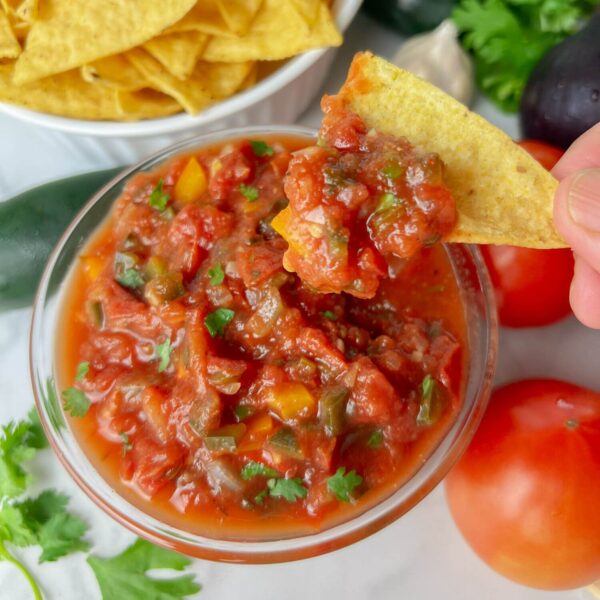
Read More: Fresh Salsa or Pico de Gallo, How to Can Salsa Safely, Favourite Salsa Recipes
Canning salsa is definitely an option – you just need to follow a trusted and tested recipe to ensure you have the right acid content for water bathing tomatoes/salsa. Use a tested recipe recommended for canning – you’ll have piece of mind. Your family’s favourite salsa recipe, or that recipe you saw on social media may not be safe for canning. I use the recipes at the National Center for Home Food Preservation. There are several to choose from, they’re delicious and they’re tested – everything you could want.
Want to avoid canning? Have a family favourite recipe that you’re not sure is safe for canning – make freezer salsa!
Freezing offers endless options and you get to control how much and what type of spicy peppers you want to toss in.
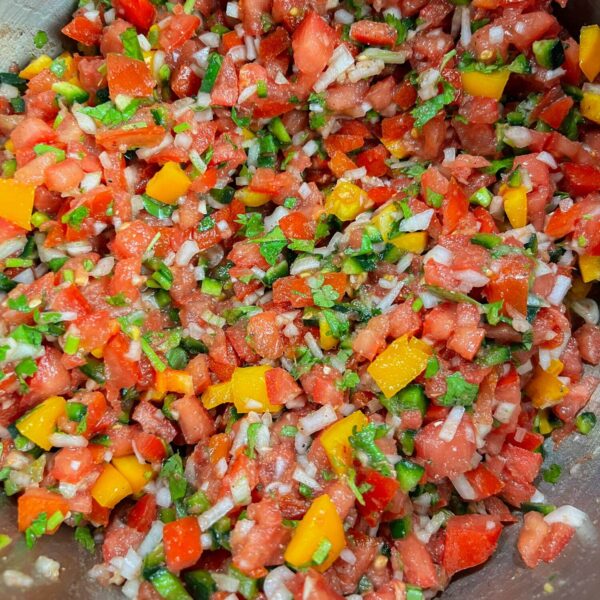
What is freezer salsa like?
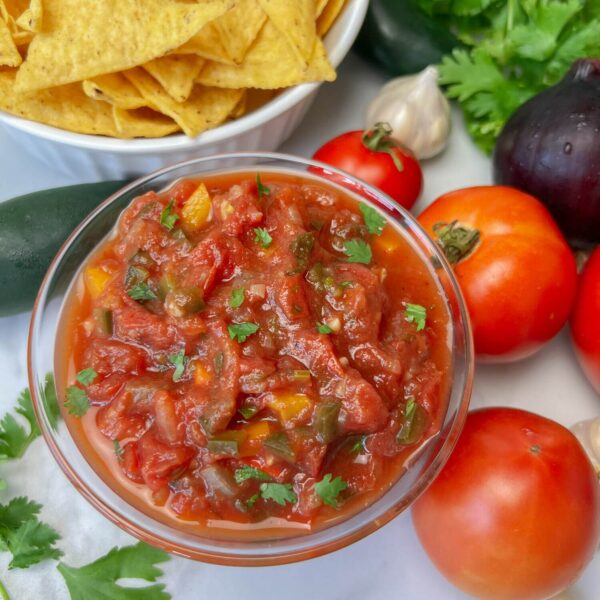
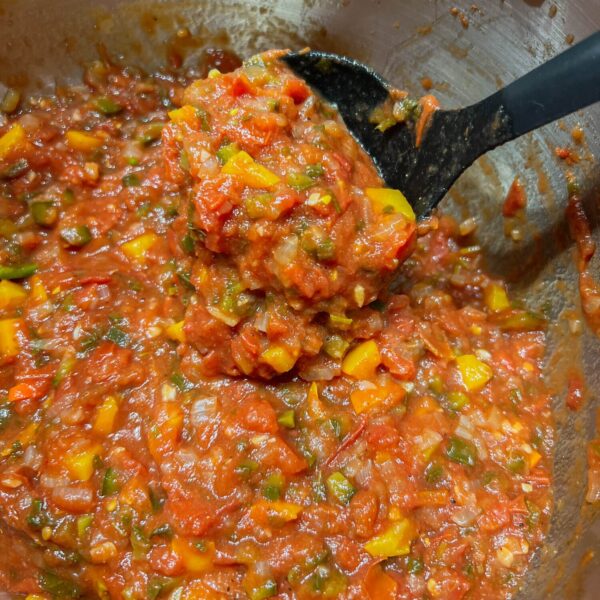
Freezer salsa is a cooked salsa with all the ingredients you wish, flavoured the way you want. The recipe below is a standard salsa including tomatoes, onion, garlic, hot pepper and sweet pepper with spices.
When thawed, it may be a little more liquidy than jarred salsa. You can drain off some of the top liquid and then stir the salsa really well before serving. If you’re using the salsa in a cooked recipe, just use as is.
How to Prevent Watery Frozen Salsa
- Use Roma or Paste Tomatoes
- they contain less watery seed pockets than slicing tomatoes
- if you have slicing tomatoes, remove some of the liquid from them before adding to salsa
- Cook The Salsa
- Let those veggies release some their liquids by cooking them
- cook it long enough to allow the moisture evaporate
- Cooking also blends the flavour better for freezer salsa
- Add Tomato Paste
- The tomato paste binds up some of the liquid in the salsa and adds nice body to the salsa
- Cool salsa completely before freezing
- Prevent any additional moisture building up in containers due to condensation
- Thaw salsa
- Thaw salsa undisturbed and before stirring, remove any liquid that has separated
- Stir well to mix everything together
- Drain off additional liquid if necessary
As a final perk, add fresh cilantro to your salsa and enjoy.
Can I freeze raw, fresh salsa, do I have to cook it?
You won’t get good results when freezing fresh, raw salsa. It’s safe to do, but the results aren’t great. The fresh veggies will turn mushy and the salsa will be much more liquidy than if you cook the salsa.
You also get better flavour by cooking the salsa and seasoning it to your liking. Fresh salsa just won’t taste the same and you’ll have to do a lot of adjusting and fussing when thawed.
What other ingredients can I add to freezer salsa?
Get creative with your freezer salsa by adding a variety of ingredients to enhance its flavor and texture. That’s the benefit of freezer salsa vs canned salsa – you can add anything you want and not worry about food safety. If it’s freezer safe, you can add it! Here are some ideas:
- Corn: You can use fresh, frozen, roasted or canned corn for a touch of sweetness and color.
- Black Beans: Canned black beans, rinsed and drained, can add protein and a hearty texture to your salsa.
- Mango: Diced mango chunks can bring a delightful tropical sweetness to your salsa.
- Pineapple: Chopped pineapple adds a sweet and tangy twist to the salsa.
- Hot Peppers: Jalapenos only add a tiny bit of spiciness, for real heat, consider adding hotter peppers like habaneros, scotch bonnets, serranos, etc.
- Smokey Flavour: If you love a smokey flavour to your salsa add chipotle peppers in adobo sauce, smoked paprika, liquid smoke or smoked salt. Start with a small amount and add as desired.
- Lime Zest: Grated lime zest can intensify the citrusy flavor.
- Tomato Paste: Canned tomato paste is optional in the recipe, but it helps create a thicker, smoother salsa that brings everything together.
You could also roast any of the ingredients before cooking together for another flavour profile.
How long does freezer salsa last?
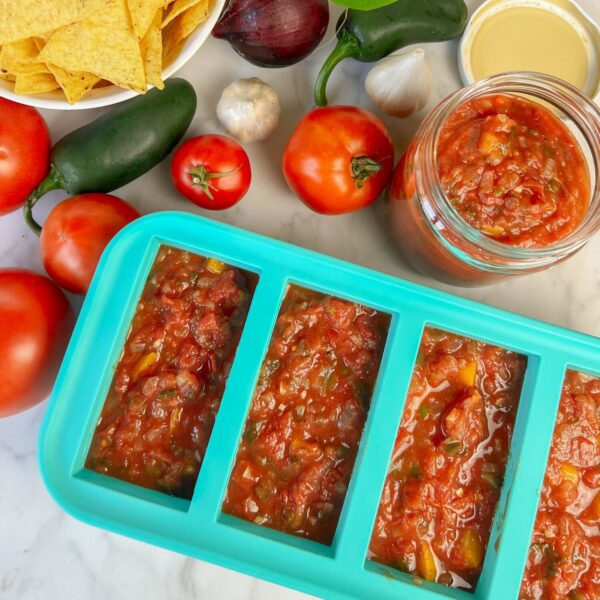
- Up to 6-8 months: If stored in an airtight container or freezer-safe bag. It is safe to eat as long as it stays frozen, but you’ll enjoy it the most within 6-8 months.
Freeze in convenient portion sizes so you only need to thaw what you will reasonably use at any one time. I like one or two cup portion sizes.
Recipe for Freezer Salsa
Tomato Freezer Salsa
Ingredients
- 12 – 15 large ripe tomatoes ~10 cups chopped
- 2 large onions finely diced
- 8 cloves garlic minced
- 4-8 jalapeno peppers finely chopped
- 1-2 really hot peppers optional (cayenne, scotch bonnet, habanero, etc)
- 2 sweet peppers diced
- 3 oz tomato paste 1/2 can (optional)
- 1/2 cup fresh cilantro chopped
- 1/4 cup lime juice or cider vinegar
- 3 tsp ground cumin
- 1 tsp ground coriander
- 2 tsp granulated sugar
- 2 tsp salt
- 1/2 tsp cayenne pepper
- 1 tsp black pepper
Instructions
- Core, seed (remove majority of liquid jelly) and dice tomatoes. Peeling is optional. You should get about 10 cups.
- Mix tomatoes, onions, garlic, jalapenos, hot peppers (if using), sweet peppers, tomato paste, cilantro, lime juice, cumin, coriander, sugar, salt, cayenne pepper and black pepper in large pot. Add other ingredients like corn, beans, chipotle peppers or sauce, etc.
- Bring to a boil, stirring often. Reduce to simmer and cook, uncovered until thickened to desired consistency, at least 45 minutes.
- Taste and adjust seasoning to your liking.
- Allow salsa to cool completely.
- Serve or fill freezer bags or containers or glass jars leaving 1/2 inch headspace.
- Freeze up to 6 months.
Video
Notes
Nutrition Facts (per serving)
Getty’s Salsa Tips on YouTube
Are you a visual learner? Check out my salsa videos and tips on my YouTube channel.
What are your favourite additions to salsa? If you make this salsa, take a photo, post it on Instagram and tag @getgettys so I can see it and like it!
Select, store and serve seasonal food for everyday cooking with Getty. Getty is a food educator and Professional Home Economist,who loves sharing tips and recipes following the seasons from her Canadian kitchen. Sign up to get seasonal tips and recipes delivered to your inbox. Learn more about Getty or check out her books and guides.
If I add fruits to this salsa, are they also cooked right along with the tomatoes? I was afraid they would turn to mush, like mango for example.
Great question! If you’re adding fruit like mango, pineapple, or peaches to this salsa, stir it in during the last 5–10 minutes of simmering. That way it heats through and blends with the flavours, but doesn’t get too mushy or completely disappear.
If you want the fruit to stay more distinct and chunky, you can even stir it in after cooking, once the salsa has cooled a bit. That’s especially nice if you’re serving it fresh or freezing it.
This is my go-to freezer salsa recipe! I’ve been using it for years and love it! I choose not to core or seed the tomatoes (I hate doing it) so I let the mixture cook down to the thickness I want. I get so many compliments on it—thank you for a fantastic recipe!
Thank you Kelly! So glad you found a go to recipe.
If I roast/ charred tomatoes and jalapeños and than add all the ingredients to make the salsa , can I freeze the salsa than
Hi Abhi,
Yes, your salsa would be safe to freeze.
Enjoy!
Getty
What is the reason for coring and seeding the tomatoes? I had already cut them up before I decided to make the salsa so I could freeze.
Hi Ruth,
It’s really just personal preference. Seeding the tomatoes and using paste tomatoes makes for a less liquidy salsa. Coring is just because we prefer not to eat the tough core bit.
Hope that helps.
Getty
Would you say this recipe is about as hot as Medium salsa? I want decent spice without going overboard. Can I taste it for spiciness before cooking it or will there be a significant difference between the fresh salsa and cooked salsa?
Hi Matt,
I’d say it is mild to medium. You can definitely taste it for spiciness while cooking to judge the spiciness. During cooking the spiciness will just distribute more evenly and blend in better, so you’re not just getting heat when you bite on a piece of hot pepper.
Enjoy.
When not frozen, how long is the salsa good for?
I’d say homemade salsa lasts in the fridge about 5-7 days. The longer you keep it out of the fridge when you’re using it, the shorter it will last. It’s best to pour a little in a small bowl for use and tuck the big bowlful back in the fridge right away.
do you use the seeds from the jalpeno peppers? and if so how hot is it?
Hi Audrey,
Did you know the hottest part of peppers are the white ribs or membranes (pith) on the inside of the peppers. They’re hotter than the seeds. The more of the ribs you leave on, the hotter the salsa will be. The seeds will add some spiciness since they’ve been rubbing against the pith. If you like your salsa on the mild side, cut out the white part on the inside and remove all the seeds.
Can I freeze fresh salsa without cooking it?
Hi Deniz
It is safe to freeze fresh, uncooked salsa, but I wouldn’t recommend it. The texture will change leaving it quite mushy. The tomato peel would separate and be tough compared to all the other ingredients. It would be okay to add to soups or sauces but it wouldn’t be great for salsa and chips.
Try this recipe for freezer salsa http://www.gettystewart.com/how-to-make-freezer-salsa-tomatoes/
Hi Getty,
Once you thaw frozen salsa, how long can the thawed salsa stay in the fridge?
Thanks!
Laura
Hi Laura,
Treat it like you would any other opened salsa. The Eat By Date website recommends 5-7 days for homemade salsa and 1-2 weeks for commercial jarred salsa that has been opened. I would aim for 7 days max.
Enjoy,
Getty
Can you can your tomato freeze salsa?
No, this salsa is not suitable for canning, the acidity has not been tested and with the addition of all those non-acidic veggies it is likely not below the pH of 4.6 required for safe canning. By canning a low acid mix like this you create a perfect environment for clostridium botulinum the bacteria that leads to botulism. When I can salsa I use recipes from the National Centre of Home Food Preservation. http://nchfp.uga.edu/how/can3_tomato.html Be safe and enjoy your salsa!
Is the acidity issue true for all canning? Fresh veggies, jams, sauces, bar clams even? Or specifically salsa?
Hi Kim,
Yes acid is a critical factor when water bath canning. Only high-acid food with a pH of 4.6 or less can be processed using the boiling water bath method. Other foods need to be pressure canned. Tomatoes are considered borderline acidic and in salsa the addition of peppers and onions and herbs which are all low acid means you need to add acid and specified amounts of low acid ingredients to ensure it’s acidic enough to be safely water bath canned. When looking for recipes check the National Center for Home Food Preservation.