

How to Sauté and Braise Red Cabbage: Classic German Red Cabbage
Learn to sauté red cabbage in the traditional German style. In this post, I share my family’s method for braised red cabbage. We start with a quick sauté but finish with a slow simmer to create a texture that is incredibly tender and buttery.
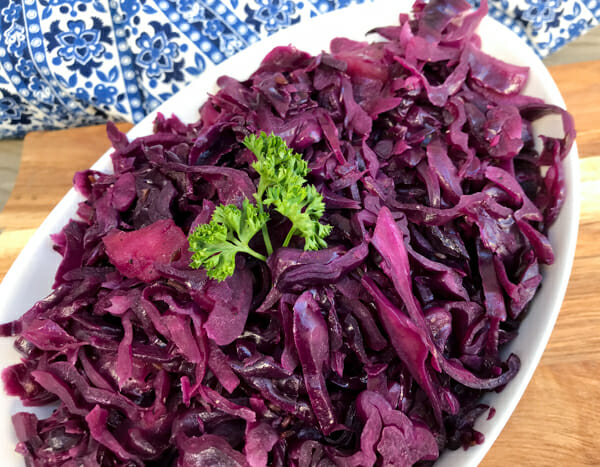
Serve with: Spaetzle, Grilled Pork Chops, Goulash and German Cucumber Salad
Quick Summary: Getty’s Pro Tips for Red Cabbage
- The Flavour Secret: Use a mix of vinegar, sugar, and tart apples to achieve that signature German sweet-and-sour balance.
- Braising: While we start by sautéing red cabbage first, the secret is finishing with a slow braise – cover with a lid and let simmer for 30+ minutes. The long, moist heat is what makes the cabbage tender and easy to digest.
- The Colour Fix: If your cabbage starts looking blue or grey during cooking, a splash of acid (extra vinegar) at the end will pop that vibrant purple colour back.
What Does Sautéed Red Cabbage Taste Like?
The long simmering transforms humble red cabbage into something extraordinary. The texture becomes almost buttery and incredibly tender, while the flavour achieves a perfect sweet-and-sour balance. You’ll taste the brightness of the vinegar, grounded by salt and the warm, aromatic notes of caraway and cloves. It is a very unique flavour. Honestly I can’t think of anything else that resembles it. My husband and I love it, the kids prefer green peas!

The Nutritional Benefits of Eating Red Cabbage
Cabbage has been a kitchen staple for centuries, and for good reason. It’s versatile, affordable, and has incredible staying power in the fridge. But beyond its practicality, red cabbage is a nutritional heavyweight.
Easier on the Digestion
One of the best things about this traditional German method is that the long, slow cooking process breaks down the tough cellulose fibers, making the cabbage much gentler on the digestive system.
To support this even further, we include caraway seeds. Caraway is a known carminative spice, meaning it specifically helps prevent gas and bloating. When you combine the broken-down fibers of the braised cabbage with the digestive support of caraway, you get a hearty dish that feels as good as it tastes.
More Than Just a Pretty Colour
That intense purple hue isn’t just for show. It comes from anthocyanins—powerful antioxidants that aren’t as prevalent in green cabbage. In fact, red cabbage often contains significantly more Vitamin C and iron than its green cousin.
A Quick Breakdown of the Benefits of Red Cabbage:
- Immune Support: High in Vitamin C and Vitamin A.
- Bone Health: A great source of Vitamin K and Calcium.
- Heart & Nerve Health: Provides essential Potassium and Manganese.
- Cellular Protection: Packed with cancer-fighting antioxidants and fiber.
Pro Tip: Because red cabbage is so dense and stores so well, it’s one of the most cost-effective ways to keep fresh, nutrient-dense produce on your table all winter long.

Why Add Apples to Red Cabbage?
Apples do more than add sweetness and flavour. Here’s what they’re really doing in the pot:
- Release pectin as they cook — the same natural fibre used to thicken jam.
- Naturally thicken the cooking liquid, creating a smooth, glossy sauce.
- Work with the vinegar or other acid to improve texture and body.
- Balance flavour, adding gentle sweetness to offset the tang of vinegar and the warmth of spices.
It’s simple food science that generations of home cooks figured out long before we talked about pH and soluble fibre.
And don’t worry, those apples cook down and blend in beautifully.

Why Does Red Cabbage Turn Blue?
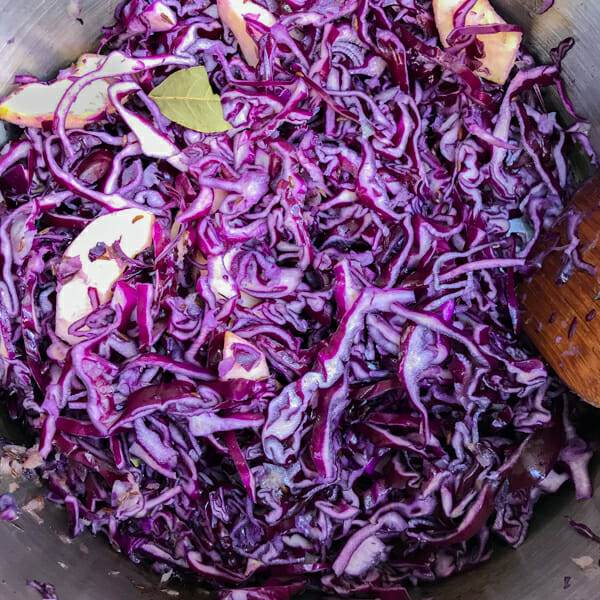
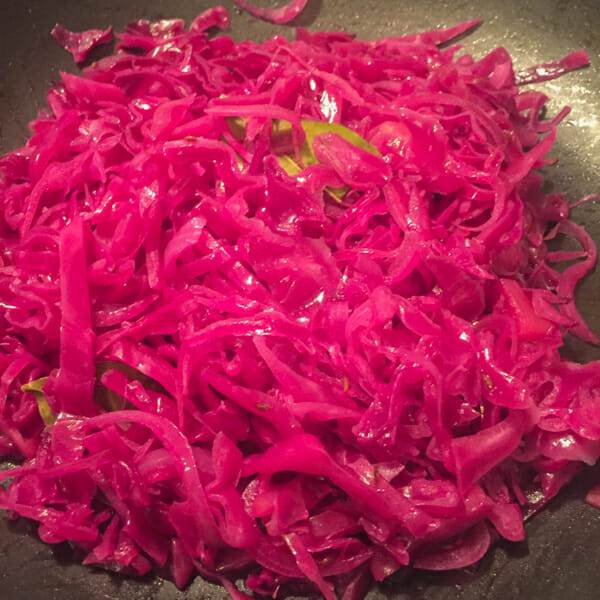
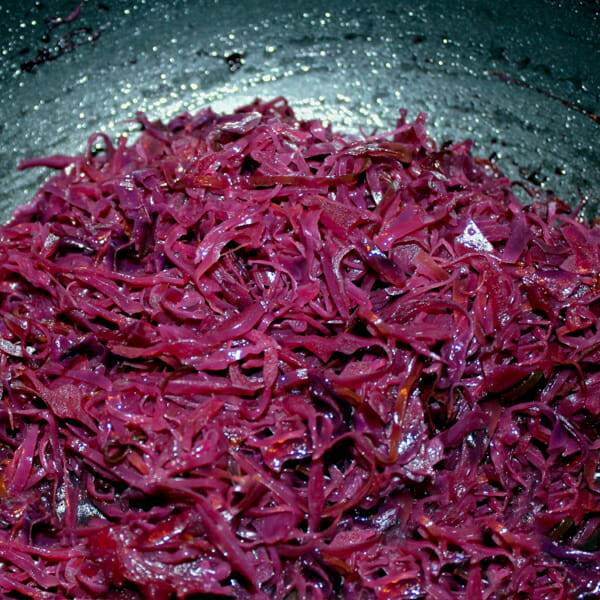
It’s the anthocyanins, those desirable flavonoids with antioxidant effects, that give red cabbage its red/blue/purple appearance. These pigments are water soluble and sensitive to pH changes. So, when we sauté red cabbage in water and vinegar we create chaos! Think of it like a science experiment in your kitchen; the more acid you keep in the pot, the brighter the red!
Red cabbage and vinegar (acid) will cause more of a red colour. The longer you cook the cabbage, the more acid evaporates and the darker and bluer the cabbage will become. Longer cooking will also make it sweeter and more tender. If you want some of that red colour back, try adding acid at the end of cooking.
Recipe for German Style Red Cabbage
Here is my mom’s recipe for how to sauté red cabbage for you to enjoy and pass on to your children.
German Red Cabbage – Sautéed & Braised
Ingredients
- 2 Tbsp oil, bacon drippings or lard
- 1 onion, thinly sliced
- 1 tsp caraway seeds
- 1 head purple cabbage, thinly sliced
- 1 apple cored and sliced into small pieces
- 1/4 cup white vinegar
- 1/4 cup red wine vinegar or red wine
- 1/3 cup water
- 1 Tbsp sugar
- 2-4 whole cloves optional
- 1 bay leaf
- 1 tsp salt
- 1/2 tsp pepper
Instructions
- In large pot or dutch oven heat oil.
- Add sliced onions and sauté until soft and clear; do not brown.
- Add caraway seed and sauté for 30 seconds to release flavour.
- Add cabbage and apples.
- Stir and cook until cabbage is slightly wilted, about 3 minutes.
- Add vinegars, water, sugar, cloves and bay leaf and bring to boil. Add more water if needed (depending on how big your cabbage is).
- Reduce heat, cover and simmer until cabbage is tender, about 30 to 40 minutes.
- Add salt and pepper to taste. Add more sugar if too acidic.
Notes
Nutrition Facts (per serving)
What to Serve with Red Cabbage
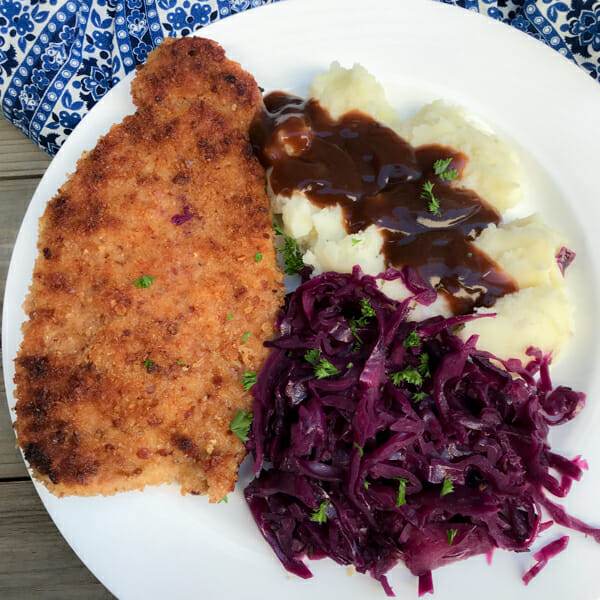
In our German household we served red cabbage with all the classics – goulash, schnitzel, bratwurst, pork roast, Sauerbraten (marinated beef roast), Salisbury steak (Frikadellen), rouladen, etc. The red cabbage can handle hardy meat dishes! On the side we had either boiled potatoes, mashed potatoes or spaetzle. If we were lucky, we’d also have my favourite cucumber salad or some other side salad.
Braised red cabbage is also excellent with wild game. I’ve tried it with venison, goose and duck.
I also love it with fried eggs. In fact, I always make a little extra so I can have fried eggs and red cabbage for lunch the next day.
Have you ever tried sautéed red cabbage? What are favourite dinners that take you down memory lane?
I’d love to hear from you, leave a comment below or reach me on Instagram @getgettys or Facebook @GettyStewart.HomeEconomist.
Cook with the seasons, effortlessly! I’m Getty, a food educator and Professional Home Economist, helping you select, store, and serve seasonal ingredients in delicious, simple, everyday meals. Sign up for seasonal tips and recipes delivered straight to your inbox, and dive deeper with my books, guides, or YouTube content.
I really appreciated the information on ingredients in the recipe. I had just been wondering why anyone would ever use caraway seeds. LOL
Glad to help solve the caraway mystery!
Thank you, my friend from Germany makes this dish for me and I love it. My mother made it too but as a child I didn’t care for it much. I have been wanting to learn this lovely side dish vegetable. German food is on the heavier side and not very highly spiced, so I don’t gravitate to the heavy meat based cuisine that it often is. However if you work physically hard and are outdoors much of the day….it is the food I crave. This recipe and many others shows how wholesome, simple and flavorful many German dishes are. And as far as dessert, German tortes are the best!
Braised red cabbage is an acquired taste. My kids aren’t big fans, but I love it, especially with roast meat and potatoes – hardy food for hardy German farmers!