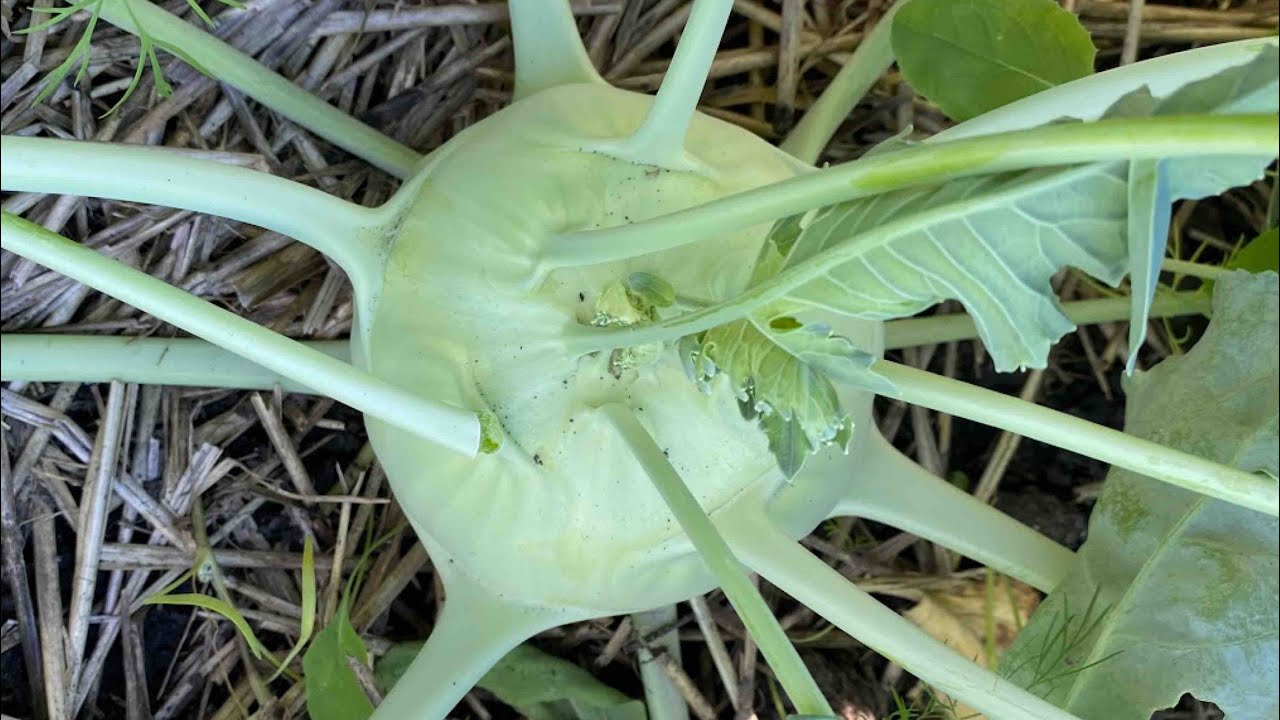
Kohlrabi – alien spaceship or delicious vegetable?
What is Kohlrabi
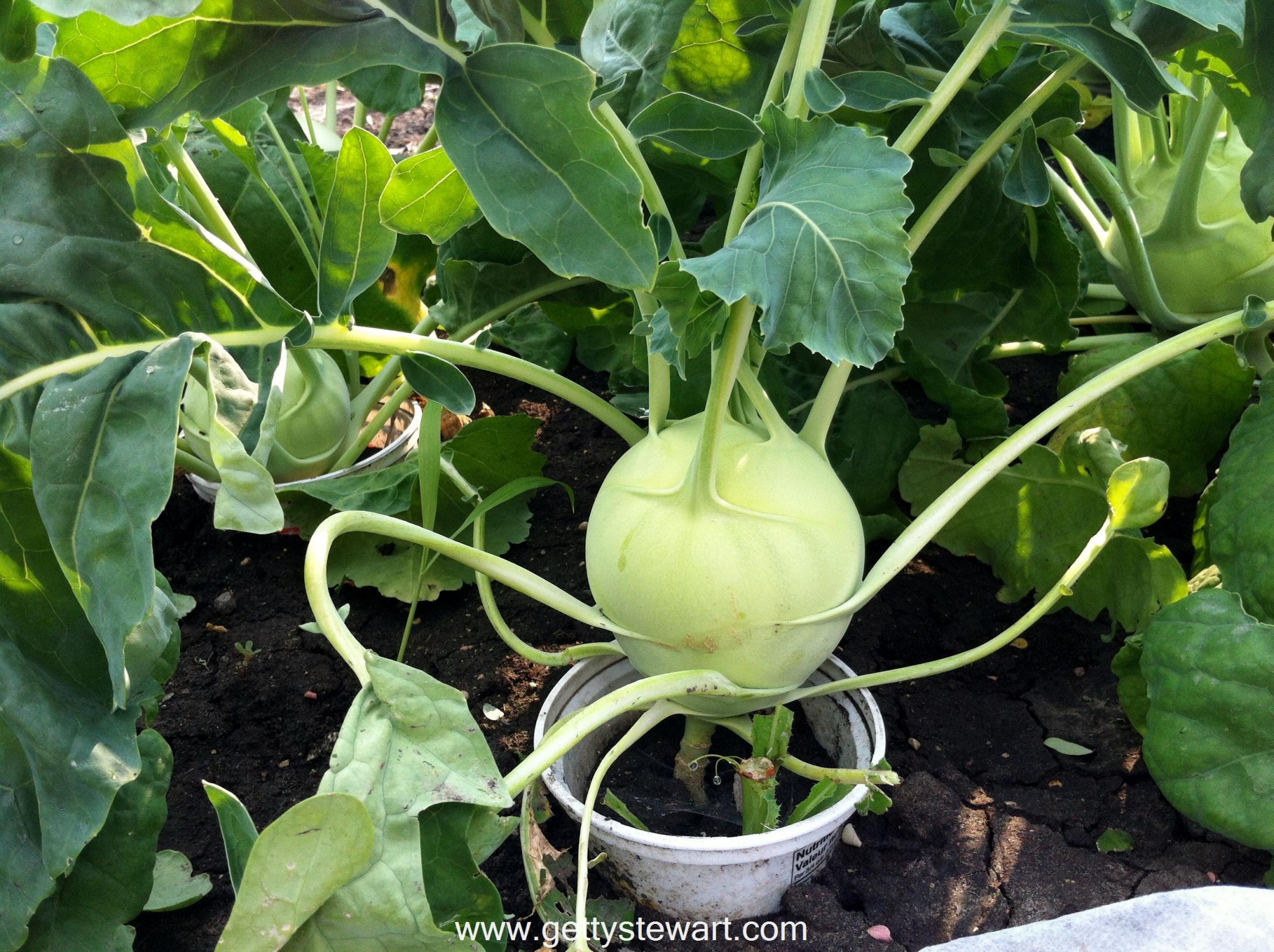
Kohlrabi is a tasty, crisp vegetable whose German name means “cabbage turnip”. It looks a little bit like a turnip but it grows above ground and tastes more like cabbage. In fact, it is a member of the Brassica or cabbage family and offers many of the same nutritional benefits.
It’s low in calories, loaded with Vitamin C, potassium and many of the powerful phytochemicals found in the brassica family. High in fiber and antioxidants, it’s one of the veggies that can help fight cancer and heart disease.
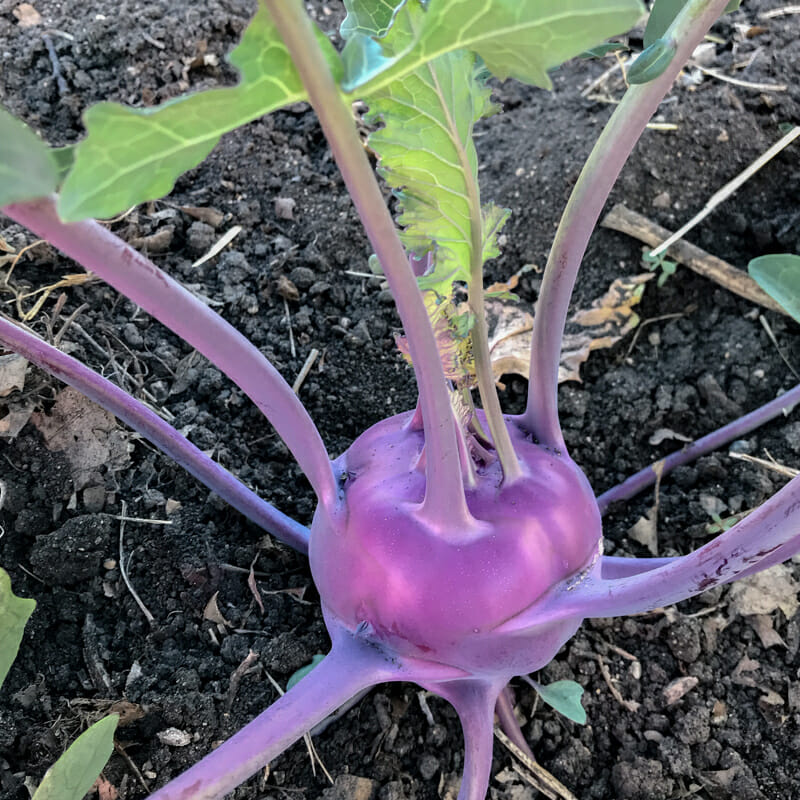
There are green varieties and purple varieties. All varieties are creamy white inside and taste very similar.
What Does it Taste Like
When raw, the texture is very crisp, like biting into a crispy apple or a radish. The flavor is a cross between cabbage and a mild radish – there’s a hint of that slight peppery bite you get with some radishes. That bite gets stronger as kohlrabi ages.
When cooked, kohlrabi becomes slightly translucent and milder tasting. Unless you cook it for a long time (which causes it to lose flavor) it keeps its shape nicely and is tender enough for anyone to enjoy.
How & When to Harvest Kohlrabi
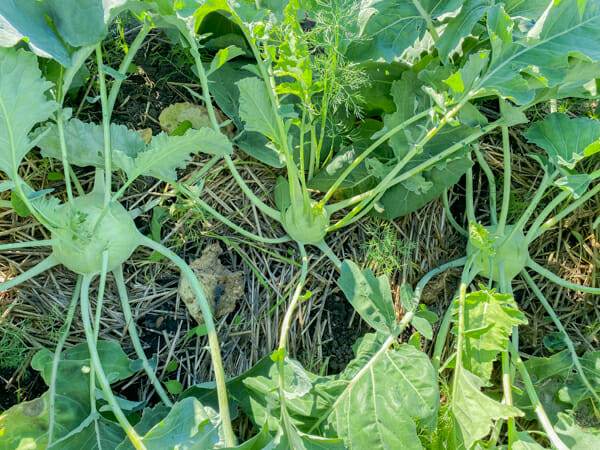
Most varieties are quick growing and are considered an early season crop. Here on the Canadian prairies (zone 3) we typically plant kohlrabi seedlings outside in mid to end May and harvest in early July. That’s a good thing, because the high heat of summer usually causes it to split and become woody and bitter.
Ideally, harvest your kohlrabi when it is 2 to 4 inches wide.
Three sizes – the one on the left if almost getting too big – pick it NOW! The middle one needs a few more days. The right one is perfect size.
Simply pull the entire plant out of the ground. You only get one bulb per plant and once you pull it, that’s it – the season is over.
Watch this video where I show three different sizes of kohlrabi and how to harvest the perfect kohlrabi.
How to Buy & Store Kohlrabi
If you’re buying kohlrabi, look for bulbs that are 2-4 inches and remember bigger is not better! You’ll see what looks like scars where the leaves used to be, those are okay, but avoid any bulbs with cracks or rough brown patches on the root end. Choose either purple or green varieties, both are great.
When you get it home, remove any leaves (if still present) and place in a loose plastic bag in the crisper drawer for several weeks. Be sure moisture from condensation doesn’t build up in the bag.
How To Use Kohlrabi
The great thing about kohlrabi is you can use it raw or cooked. You can even use the leaves (any cooked recipe using dark leafy greens).
Because of it’s mild flavor, you can use kohlrabi in an endless number of cooked dishes like stir fries, casseroles and roasted mixed vegetables. But remember it starts off very crispy so either give it sufficient time to cook through, slice thinly or shred it.
It’s perfect for steaming, sautéeing and roasting. I do not recommend grilling it, it’s just a little too crisp.
My favorite way to eat kohlrabi is to lightly steam it (peel, slice into small slices and steam for 6-8 minutes) and then add it to a basic white sauce with dill.
This saucy kohlrabi goes well with grilled bratwurst and new potatoes – a classic German dinner. For lunch, pair it with a couple of fried eggs and a pinch of nutmeg – it’s ridiculously delicious!
Have you tried this vegetable? Do you have a favorite way to eat it? Next time you try it, please, take a photo, post it on Instagram and tag #getgettys so I can see it and like it!



 When cooked, kohlrabi becomes slightly translucent and milder tasting. Unless you cook it for a long time (which causes it to lose flavor) it keeps its shape nicely and is tender enough for anyone to enjoy.

 The great thing about kohlrabi is you can use it raw or cooked. You can even use the leaves (any cooked recipe using dark leafy greens).
 This saucy kohlrabi goes well with grilled bratwurst and new potatoes – a classic German dinner. For lunch, pair it with a couple of fried eggs and a pinch of nutmeg – it’s ridiculously delicious!
 Have you tried this vegetable? Do you have a favorite way to eat it? Next time you try it, please, take a photo, post it on Instagram and tag #getgettys so I can see it and like it!

 When cooked, kohlrabi becomes slightly translucent and milder tasting. Unless you cook it for a long time (which causes it to lose flavor) it keeps its shape nicely and is tender enough for anyone to enjoy.
 The great thing about kohlrabi is you can use it raw or cooked. You can even use the leaves (any cooked recipe using dark leafy greens).
 This saucy kohlrabi goes well with grilled bratwurst and new potatoes – a classic German dinner. For lunch, pair it with a couple of fried eggs and a pinch of nutmeg – it’s ridiculously delicious!
 Have you tried this vegetable? Do you have a favorite way to eat it? Next time you try it, please, take a photo, post it on Instagram and tag #getgettys so I can see it and like it!