

Whole Wheat Does Not Mean Whole Grain in Canada
Is 100% Whole Wheat Bread Whole Grain?
Not necessarily. In Canada, bread made with 100% whole wheat flour is not whole grain bread. This is because Canadian whole wheat flour, unless otherwise specified, is missing parts of the whole grain. You see, in Canada, when wheat is processed into flour, the various parts of the kernel are separated. To make whole wheat flour, some of the bran and germ are added back – but not all. Canada’s Food and Drug Regulation permits up to 5% of the kernel to be removed. Typically, it is the nutrient rich bran and germ that are removed as a way to reduce rancidity and increase shelf life. According to the American Association for Cereal Chemists, the internationally recognized leader in this area, whole grain is defined as “consisting of intact, ground, cracked or flaked grain whose principal components – the endosperm, germ and bran are present in the same relative proportions as they exist in intact grain.” Canadian whole wheat flour does not meet that criteria, therefore any product made primarily from whole wheat flour cannot be considered whole grain. Notice I specifically said Canadian whole wheat; flour in the US, UK and Europe is actually 100% whole grain, therefore their 100% whole wheat bread is whole grain bread. Crazy, eh?!
“whole grain [insert name of grain]” or “whole grain [insert name of grain] flour”
For example “whole grain wheat” or “whole grain wheat flour”.
Ignore front of packaging claims and labels like “multigrain”, “ancient grains”, “all natural”, “organic” or “made with whole grains”. They do not provide sufficient information to determine if a product is whole grain or not. “Made with whole grains” sounds promising, but this claim does not indicate how much whole grain was used. The ingredient list is the place to go for accurate information.
If whole grain products are difficult to find or not popular with your family, opting for 100% whole wheat bread or even 60% whole wheat bread is the next best thing as it does offer more fibre, B vitamins and minerals than bread made with white refined flour.
What to Look for When Buying Bread
In the article, Leslie Beck recommends you look for the following when buying bread:- 100% whole grain
- 2 g of fibre/30 g slice of bread or 3 g of fibre/45 g slice of bread
- < 200 mg of sodium per slice
- as little sugar as possible
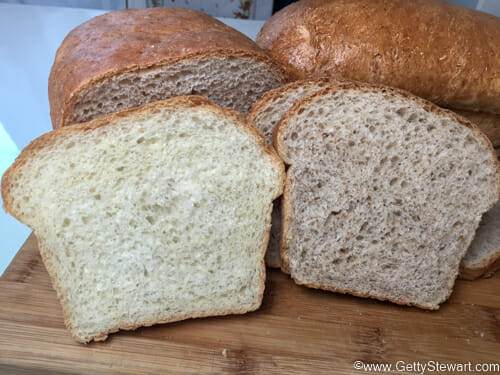 You may need to buy whole grain flour from a bulk store or direct from a local supplier. Another option is to use regular store bought flour and add bran and wheat germ into your dough. In an article on Home&Family.net, Fellow Professional Home Economist, Jennifer Dyck recommends adding 1 tablespoon of wheat germ for every cup of whole wheat flour you use.
Does any of this information surprise you? Will this information change your bread purchasing/making?
You may need to buy whole grain flour from a bulk store or direct from a local supplier. Another option is to use regular store bought flour and add bran and wheat germ into your dough. In an article on Home&Family.net, Fellow Professional Home Economist, Jennifer Dyck recommends adding 1 tablespoon of wheat germ for every cup of whole wheat flour you use.
Does any of this information surprise you? Will this information change your bread purchasing/making?
Cook with the seasons, effortlessly! I’m Getty, a food educator and Professional Home Economist, helping you select, store, and serve seasonal ingredients in delicious, simple, everyday meals. Sign up for seasonal tips and recipes delivered straight to your inbox, and dive deeper with my books, guides, or YouTube content.