

When and How to Harvest Dill and How to Freeze It
Learn when and how to harvest dill to make the most of this fragrant, much loved herb. Dill is one of those herbs that’s tricky to preserve. The flavour tends to fade quite quickly relative to other herbs. I find that freezing dill helps keep the flavour a little longer than drying dill. Here’s how I harvest and freeze my dill.

Read more: How to Dry Dill, How to Prune Chives, Prune Mint for a Fuller Harvest, How to Cut Basil for a Bushier Growth
When to Harvest Dill
The best time to harvest dill is when it is young and tender, before flower heads form. You can even start harvesting dill when it is quite small with only four or five stems growing from the center stalk.
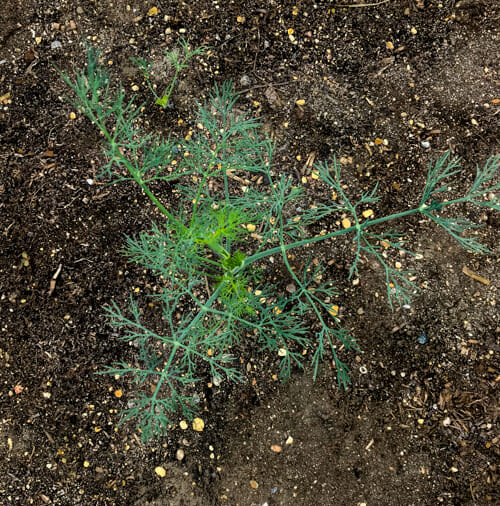
Watch the Video: Step by Step How and When to Harvest Dill
Here in Garden Zone 2b-3 on the prairies, end of June, early July is a good time to harvest dill. This is when the dill has the most flavour and pests like aphids haven’t moved in yet.
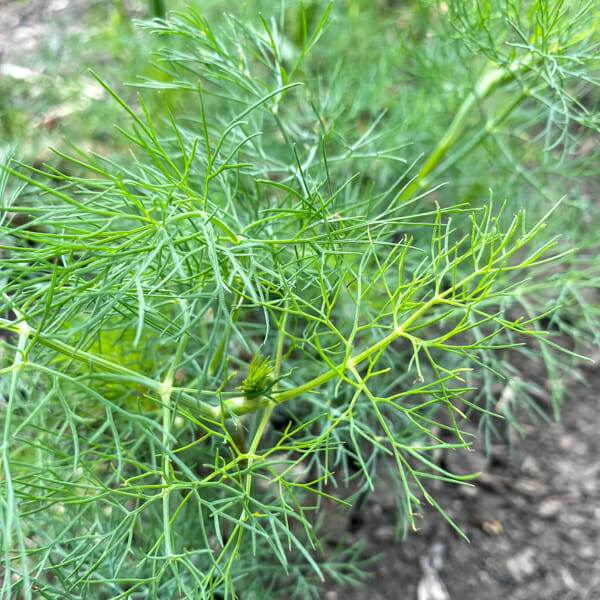
The best time of day to pick is early in the morning after the dew has gone, but before the heat of the day causes dill to become droopy.
5 Ways To Prolong The Dill Harvest
Want to keep dill coming all summer instead of just a few weeks? Here's how.
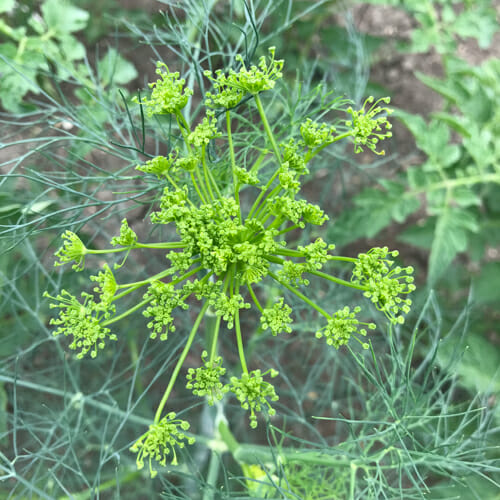
1.Remove flower heads as soon as you notice them. This is the single best way to prolong your harvest. Once dill flowers, all the plant's energy shifts to flower and seed production. The leaves lose moisture, get tougher and drier, and the fern like branches start to turn yellow or brown at the tips, so you want to catch flower heads early and pinch them off before that happens.
Don't worry, dill is very hardy. Removing flower heads now won't stop the plant from producing more later, and you'll still have plenty of seed heads in time for pickling season.
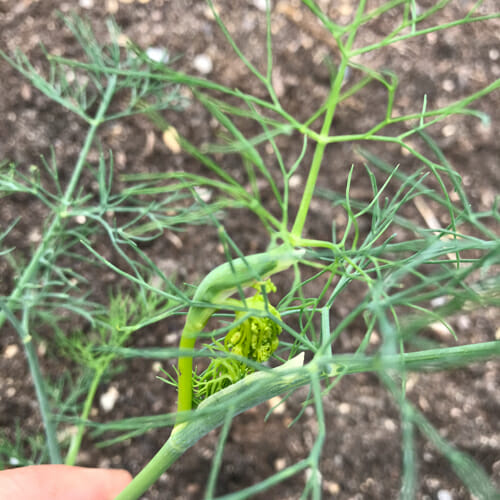
2. Harvest often, not just the flower heads. Regular picking encourages the plant to keep producing leaves instead of rushing to flower. Take the outer stems and leave the centre intact, the same way you would for a normal harvest.
3. Keep the soil evenly moist, and expect heat to speed things up. Dill under stress from dry soil tends to flower earlier, so consistent watering buys you more leafy growth. That said, dill flowers faster during a heat wave no matter what you do, so plan your harvest timing around the forecast if you can.
4. Try succession planting. Sow a new batch every two to three weeks through early summer. As one planting starts to flower, the next is just reaching its prime, so you always have young, tender dill on hand.
5. Allow some flower heads to form, eventually. Dill flower heads are great for preserving, think dill pickles, dilled beets, dilly beans, etc. Once the seeds form, they're worth harvesting too, they add wonderful dill flavour to things like this Cottage Cheese Dill Bread.
How to Freeze Dill
I prefer to freeze dill when I have an abundance in the garden or extra from the store. It's easy to do, the biggest factor is controlling for moisture so you get as few ice crystals as possible and avoid having your dill freeze together as one big clump. Here's how I do it.
It is often recommended to freeze herbs in oil or water to help retain their flavour. That's great if you're adding the herb to soups or sauces. But, that's not how I use dill. Most often, I use chopped dill in salads German Cucumber Salad and fresh dips. That's why I like to freeze dill without oil or water. I simply chop, air dry and freeze.
Step 1 - Wash
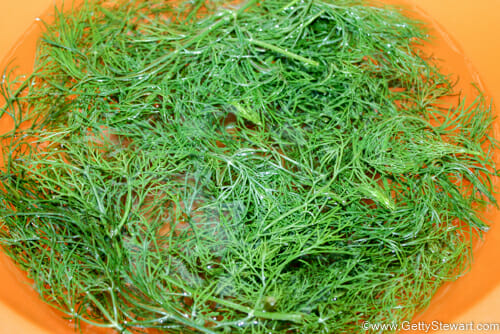
Swish dill in a bowl of cold water to remove any dirt or critters that may be stuck to the dill. Lift the dill out of the water, rather than draining the water through the dill, which may re-deposit debris.
If you notice a lot of aphids or other tiny insects, add 1 to 2 tsp of salt to 1 litre (gallon) of cold water. The salt helps loosen their grip on the leaves. Rinse well with running water to remove any salt and wash away any insects.
Step 2 - Dry
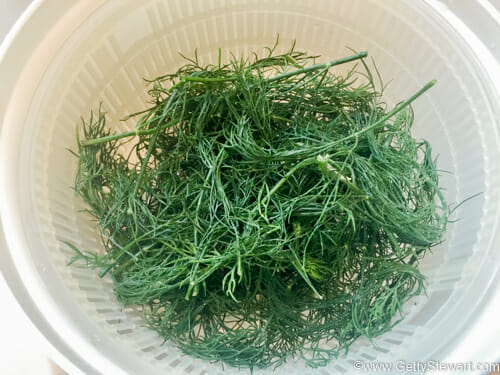
In order to prevent the dill from clumping when frozen, it's important to thoroughly dry the dill, preferably before cutting. Use either a salad spinner or lay between two clean towels and pat dry. Alternatively, place on a cotton tea towel and let air dry for an hour.
Step 3 - Remove tough stems
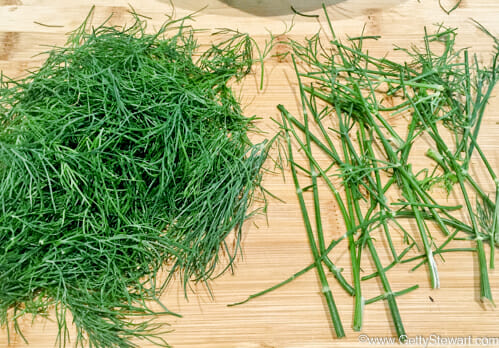
The best part of dill are the tender fronds, the tough stems need to go! Maybe, I'm a little compulsive when it comes to removing the tough stems? Is that just me or do you like to do that too?
Step 4 - Chop
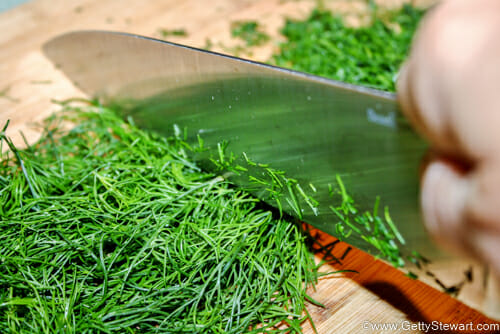
Chop dill to desired size.
Step 5 - Freeze
If the dill is dry of surface water and separates nicely, fill small containers or freezer bags and freeze for three to six months. It will be safe to use for much longer, but the flavour will fade quickly after that.
If the dill is still quite wet, let it dry out for an hour or so before placing in freezer containers. This will help ensure it won't freeze in one big lump.
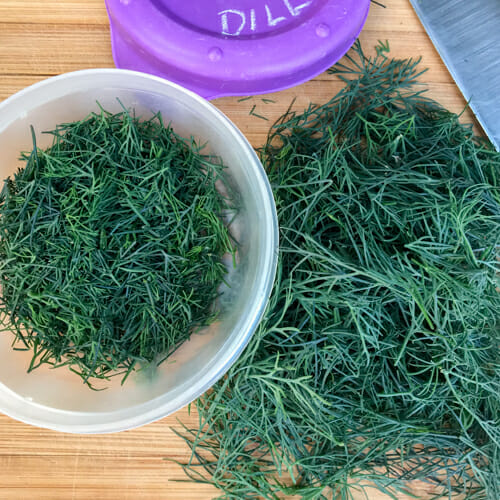
And that's it. Pretty easy isn't it.
How Long Will Frozen Dill Last
I wish I could tell you that frozen dill lasts a long time and will taste as fresh and vibrant as the day you picked it. But that would be a lie. Dill loses it's flavour very quickly, whether it's dried or frozen. I find that freezing helps it keep its flavour a little longer than when dried.
Expect frozen dill to be flavourful for 3-6 months. After that flavour will start to fade and you'll start to notice more ice crystals. It's still safe to eat, but it will get less enjoyable the longer it stays in the freezer.
How to Freeze Dill
How to Freeze Dill
Ingredients
- 1 bunch Dill
Instructions
Step 1 – Wash
- Wash dill to remove any dirt or critters that may be stuck to the dill. If there are lots of little insects, soak in cool salt water for 5 minutes (1tsp salt/1 litre water).
Step 2 – Pat Dry
- To prevent clumping when frozen, thoroughly dry dill before cutting. Use a salad spinner, lay between two clean towels and pat dry, or lay on towel and let air dry for an hour.
Step 3 – Remove tough stems
- Strip tender fronds from tough stems for best flavour and texture.
Step 4 – Chop
- Chop dill to desired size.
Step 5 – Freeze
- If the dill is dry of surface water and separates nicely, fill small containers or freezer bags and freeze for 3-6 months.If it is still quite wet, let the chopped dill dry out for an hour or so before placing in freezer containers. This will help ensure it won’t freeze in one big lump.
Video
Notes
The BEST Dill Recipes
- Dill and Cottage Cheese Bread
- Cheddar Dill Biscuits
- Dill & Feta Flatbread Appetizers
- Dillicious Egg Salad
- Dill Pickled Beans
- Sour Cream and Dill Veggie Dip
- German Cucumber Salad
- Dill White Sauce
- Apple & Beet Salad
- Tzatziki
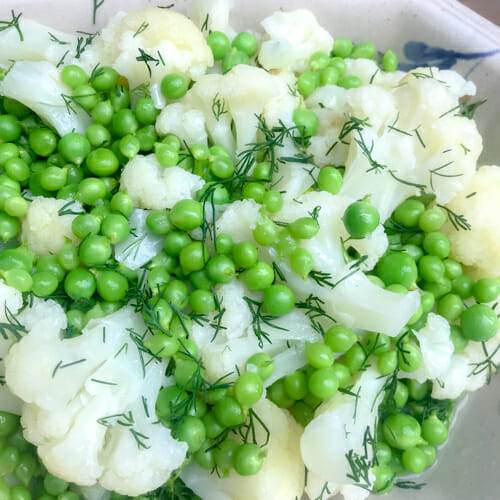
- Cauliflower and Peas with Dill
- Roasted Beet Salad
- Borscht
- Creamy Cabbage Soup

Be confident growing and using herbs.
With NO ads, and all the best tips & recipes in one convenient place! From Garden to Table: Everyday Cooking with Herbs.
65 recipes & preserves + practical tips…
- how to grow herbs
- step-by-step harvesting and preserving instructions
- tantalizing tea and beverage recipes
- mouth watering appetizers, salads, mains, and desserts
- solve all your herb FAQs
Available in ebook and paperback formats.
Cook with the seasons, effortlessly! I’m Getty, a food educator and Professional Home Economist, helping you select, store, and serve seasonal ingredients in delicious, simple, everyday meals. Sign up for seasonal tips and recipes delivered straight to your inbox, and dive deeper with my books, guides, or YouTube content.


Not sure I completely agree with the conclusion, but good points made.
Top quality content as always. Keep up the good work!
This was exactly what I was looking for. Appreciate it!
I made my first refrigerator dill pickles today. I had to buy a whole bundle of dill blossoms. Can I freeze the remaining blossoms for future use this season??
I have not tried freezing them, but it’s worth a try!
I am freezing the flower head right now. I finished the pickles and what was left I placed on parchment paper on a large cookie tray. I will let it freeze and then place it in zip lock bags. I don’t bother getting out my vacumn packer, I just place a straw in the plastic zip bag, in the middle, press the locking section right up to the straw on both sides of it. I suck out the air and then quickly press as I pull out the straw. I only use a 1/4 of a straw. It’s not quite vacumned but it’s close enough.
Thanks Jan, that sounds like a great method. The straw method is great.
That sounds great Jan, thanks for sharing. Your straw method of “vacuuming” out the air is perfect.
Thanks for the step-by-step instructions! I’ve only used dill a few times before and I end up wasting the leftovers because I don’t know how to store it long-term. I followed these instructions today and I’m looking forward to using dill more often in my recipes.
Your welcome Deepika. I’m like you and don’t like to waste food, glad you found this post helpful.
All the best,
Getty
I’ve been freezing chives, garlic scapes and green onions this summer because my CSA box has way more than I can use in a week. I’ve washed and dried them and hen chopped into sort of 1″ pieces and lay them on a 1/4 tray that I use for my quick freezing. When they’re frozen I just drop them in a ziplock bag, push out the air and seal. I’ve frozen fresh curry leaves by just putting them in the bag and then used them in cooking without a problem – they seem just like they’re fresh. I’m wondering if I could do the same with basil?
Basil is super sensitive, it will discolor and turn mushy if you freeze it as is. To keep the color, blanch (drop in boiling water) for 10-15 seconds until it wilts, dry and freeze. That said, I have chopped basil and frozen it – it ends up almost black but you do get the flavor. I prefer drying basil or making pesto – the oil coats it and prevents discoloration for the most part.
I’m also obsessive about removing stalks from my herbs! I usually dry my dill, but I will try freezing it after reading this post. If your dill goes to seed, you can save the seeds and plant them where and when you want them next year.
Good to know I’m not the only one! I allow my dill seed to spread as it wishes, so there’s plenty of dill everywhere in my garden. I also save some of the seed to use in recipes, it is quite flavorful. Hope you enjoy the frozen version.
Since dill does self seed, and pops up everywhere as a weed, I don’t weed it out until it is big enough to harvest some leaves. Wash, dry and package in Ziploc bags, freeze. Tell my friends not to let it thaw, open top of bag, push up frozen dill, cut off with sharp knife, push back in, and re-zip. Only one bag in the freezer!
Hi Dodie, great idea. I usually chop mine before I freeze, but I can see this working – not thawing being key.
Got my own bachelor’s method. I freeze bundles of dill sprigs from the store in a resealable plastic bag. When I need some, I trim off the ends, and sprinkle it on whatever I’m making. Same method works for parsley also.
Love that idea, thanks for sharing Greg!
All the best,
Getty