

How to Dry Dill: Three Simple Methods
Prefer to dry your dill instead of freezing it? Here are three methods for you to choose from.
I freeze most of my dill because I find the flavour holds up better over time. But I always dry a little bit as well because it’s so easy to do. If you’re short on freezer space or want a quick and easy way to preserve your dill without taking up freezer space, drying is the way to go.

Also Read: How to Harvest and Freeze Dill, Tips for Storing Dried Herbs, Best Ways to Dry Parsley
When to Harvest Dill for Drying
Pick dill when it’s young and tender, before the flower heads form. Once dill flowers, the leaves get tougher and lose moisture and flavour. Here in Gardening Zone 2b-3, that window is usually end of June into early July.
For best flavour, pick dill in the morning before the sun and heat cause will to wilt.
Watch the Video: Step by Step How and When to Harvest Dill
Three Ways to Dry Dill
Dill dries very quickly compared to other herbs, thanks to its thin, feathery fronds. That speed means very little risk of spoiling or moulding during the process. The only real concern is keeping it out of direct heat and sunlight to protect its colour and flavour.
Here are three key ways to dry dill. I’ve tried all three and as long as your climate is not insanely humid, all three work very well. Because dill dries so quickly and has the potential to lose flavour and colour if overdone, I do not recommend using the oven or microwave to dry dill.
1. Hang dry
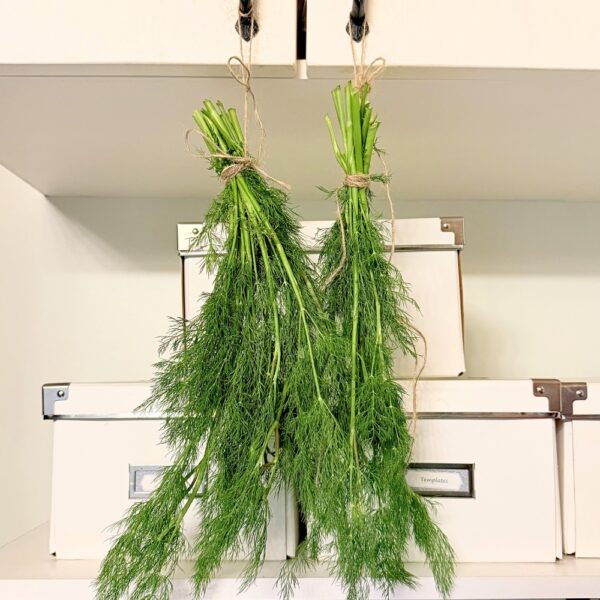
Gather small bundles of dill by the stems and tie them with string or an elastic. Hang the bundles upside down somewhere warm, dry, and out of direct sunlight. Dill is light enough that this works well even in a kitchen corner or pantry, no special equipment needed.
Want to protect your dill from dust? Hang your bundles inside a large paper bag with holes punched in it. You’ll shield the dill from dust and catch any falling leaves as a bonus. Just remember to add those air holes, good circulation is key!
2. Air dry flat
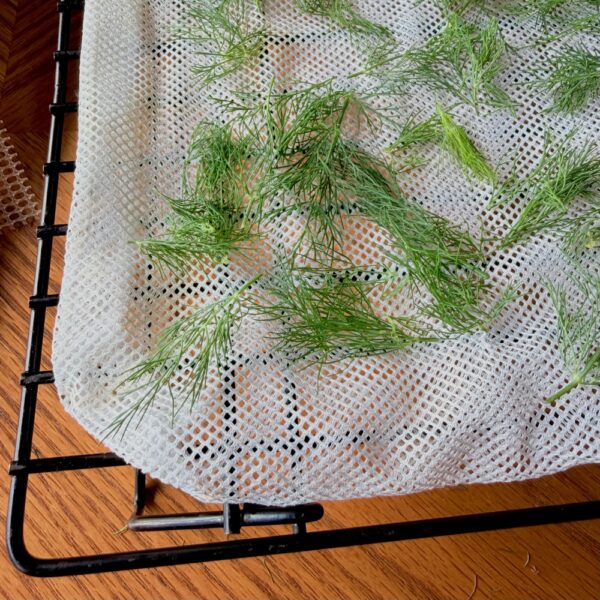
Spread the fronds in a single layer on a mesh screen (old window screens work well) or drying rack, somewhere with good air flow and no direct sun. This works especially well if your dill is extra bushy or your bundles are on the smaller side, since more surface area is exposed to the air at once.
3. Use a dehydrator
Spread fronds in a single layer on a screen tray of your dehydrator, lay a second mesh cover on top to prevent dill from blowing around inside your dehydrator. Set your dehydrator to a low herb setting (35°C/95°F), basically the same as a hot summer day! Depending on how dry or humid your area, start checking on it at the 2-3 hour mark, then check every 30 to 60 minutes.
Honestly, if you live in a dry environment, a dehydrator may be a waste of electricity, air drying may be more practical.

How To Store Dried Dill
Storing your dried dill well will help preserve its colour and flavour for longer. Here are my top tips for dill that is fully dry.
- Keep dill pieces intact rather than crumbling them into small flakes. Whole pieces hold their oils and flavour longer than pre-crumbled ones. Crush only what you need, when you need it.
- Keep in an airtight glass jar that is just the right size for the amount of dill you have. Too much airspace in that jar is a no no for dried herbs.
- Store jars in a cool, dark location away from heat sources like your stove.
- Label your jar with the date. Since flavour fades over time, this makes it easy to know when it’s time for a fresh batch. And skip the fridge, opening a cold jar again and again introduces condensation, which is exactly the moisture you’re trying to avoid.
For more on keeping all your dried herbs at their best, see my full guide: 6 Tips for How to Store Dried Herbs.
Frequently Asked Questions about Drying Dill
How long does dried dill last?
In my experience, dried dill flavour tends to start fading within 3 to 6 months, which is one reason I usually freeze dill instead. Use your nose as the real test: if it still smells like dill when you crush a piece, it’s still good. Once the scent fades, you may need to use more than a recipe calls for or make a new batch.
How do I know when dill is fully dry?
It should feel brittle and crumble easily between your fingers. If it feels leathery or just bends instead of snapping, it needs more time. Storing dill before it’s fully dry is the most common cause of mould in the jar, so it’s worth the extra patience.
How much dried dill do I use in place of fresh?
Dried dill is more concentrated than fresh, so you’ll need less of it. A general rule of thumb: use one teaspoon of dried dill for every tablespoon of fresh called for in a recipe. But, if it’s been stored for a while, you may need to use a little extra.
Can I dry dill flower heads and seeds?
Yes, though it’s really the seeds you’re after. Let the flower heads mature and turn brown on the plant, then cut them and hang or bag them to dry, the same way you’d dry the leaves. Once fully dry, rub or crush the heads to release the seeds, then discard the papery head. The seeds are what get stored and used, they’re excellent in pickling brines and recipes like Cottage Cheese Dill Bread.
Why did my dried dill turn brown?
If your dill comes out dull or brown instead of green, it likely dried too fast in too much heat or direct sun. That’s why either of the two air drying methods needs to be out of direct sunlight. If you’re using a dehydrator, keep it on the lowest herb setting for the same reason. And, it’s why I don’t recommend the microwave or oven, things can turn wrong, quickly!
Steps to Drying Dill
How to Dry Dill
Ingredients
- 1 bunch Dill
Instructions
Wash
- Wash dill to remove any dirt or critters that may be stuck to the dill. If there are lots of little insects, soak in cool salt water for 5 minutes (1tsp salt/1 litre water).
Pat Dry
- Remove any surface moisture from dill. Use a salad spinner, lay between two clean towels and pat dry, or lay on towel and let air dry for an hour.
Option 1 – Hang Dry
- Make a bundle of 5 to 8 large stems. Tie together tightly and hang upside down in a warm, dry spot out of direct sunlight. If you wish, place in a large paper bag with air holes to protect it from dust and catch any falling leaves. Check within 12 to 24 hours.
Option 2 – Lay Flat to Air Dry
- Remove large, thick stems and lay fronds in single layer on mesh screen or onto paper towel in dry location with good airflow and out of direct sunlight. Check within 12 to 24 hours.
Option 3 – Dehydrator
- Remove tough stems from dill. Spread fronds in single layer on screen tray, lay a second mesh on top to prevent dill from blowing around inside dehydrator. Set dehydrator to a low herb setting (35°C/95°F) for 2 or 4 hours (depend on how dry or humid your area is). Check every 30 to 60 minutes.
- Dry is fully dry when it is brittle and crumbles easily between your fingers. if it feels leather or bends instead of snapping, it needs more time.
Store
- Store in large pieces in an airtight glass jar that fits just the amount of dill you have. Keep jar in a cool, dark location away from heat sources like your stove.
- Only crush what you need, when you need it.
Video
Notes
Favourite Dill Recipes
- Dill and Cottage Cheese Bread
- Cheddar Dill Biscuits
- Dill & Feta Flatbread Appetizers
- Dillicious Egg Salad
- Dill Pickled Beans
- Sour Cream and Dill Veggie Dip
- German Cucumber Salad
- Dill White Sauce
- Apple & Beet Salad
- Tzatziki
- Cauliflower and Peas with Dill
- Roasted Beet Salad
- Borscht
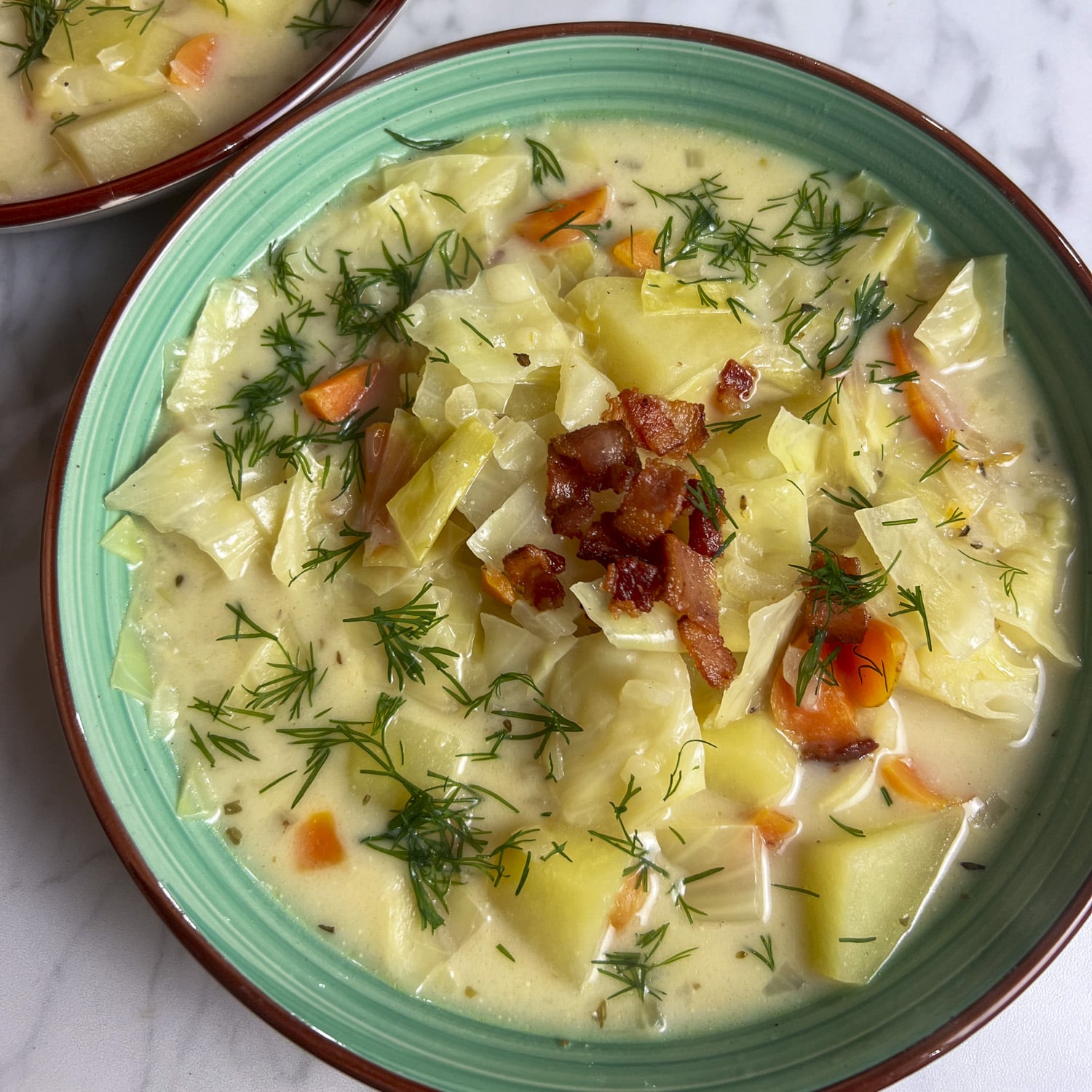
- Creamy Cabbage Soup

Be confident growing and using herbs.
With NO ads, and all the best tips & recipes in one convenient place! From Garden to Table: Everyday Cooking with Herbs.
65 recipes & preserves + practical tips…
- how to grow herbs
- step-by-step harvesting and preserving instructions
- tantalizing tea and beverage recipes
- mouth watering appetizers, salads, mains, and desserts
- solve all your herb FAQs
Available in ebook and paperback formats.
Cook with the seasons, effortlessly! I’m Getty, a food educator and Professional Home Economist, helping you select, store, and serve seasonal ingredients in delicious, simple, everyday meals. Sign up for seasonal tips and recipes delivered straight to your inbox, and dive deeper with my books, guides, or YouTube content.
wow work jshab